Most expansion plans cover the building, the budget, and the permits. Trees get ignored until one is sitting where the foundation goes.
A new addition, a bigger parking lot, or a second building all need room. If mature trees already own that room, they set your schedule, your costs, and what your contractors can do on day one.
For Tulsa business owners and property managers,
commercial property tree removal belongs in the plan from the start.
Why Trees Wreck Expansion Timelines
Your site plan means nothing to a tree. A healthy oak will happily stand right where you drew the loading dock. And the roots? They run far past the canopy, straight through the spot where your new foundation or utility line needs to go.
The usual problems:
- Trees inside the footprint of a new addition or building (the obvious one, and still the one people miss)
- Roots reaching into planned excavation or trenching areas (you can’t see them until the dig starts)
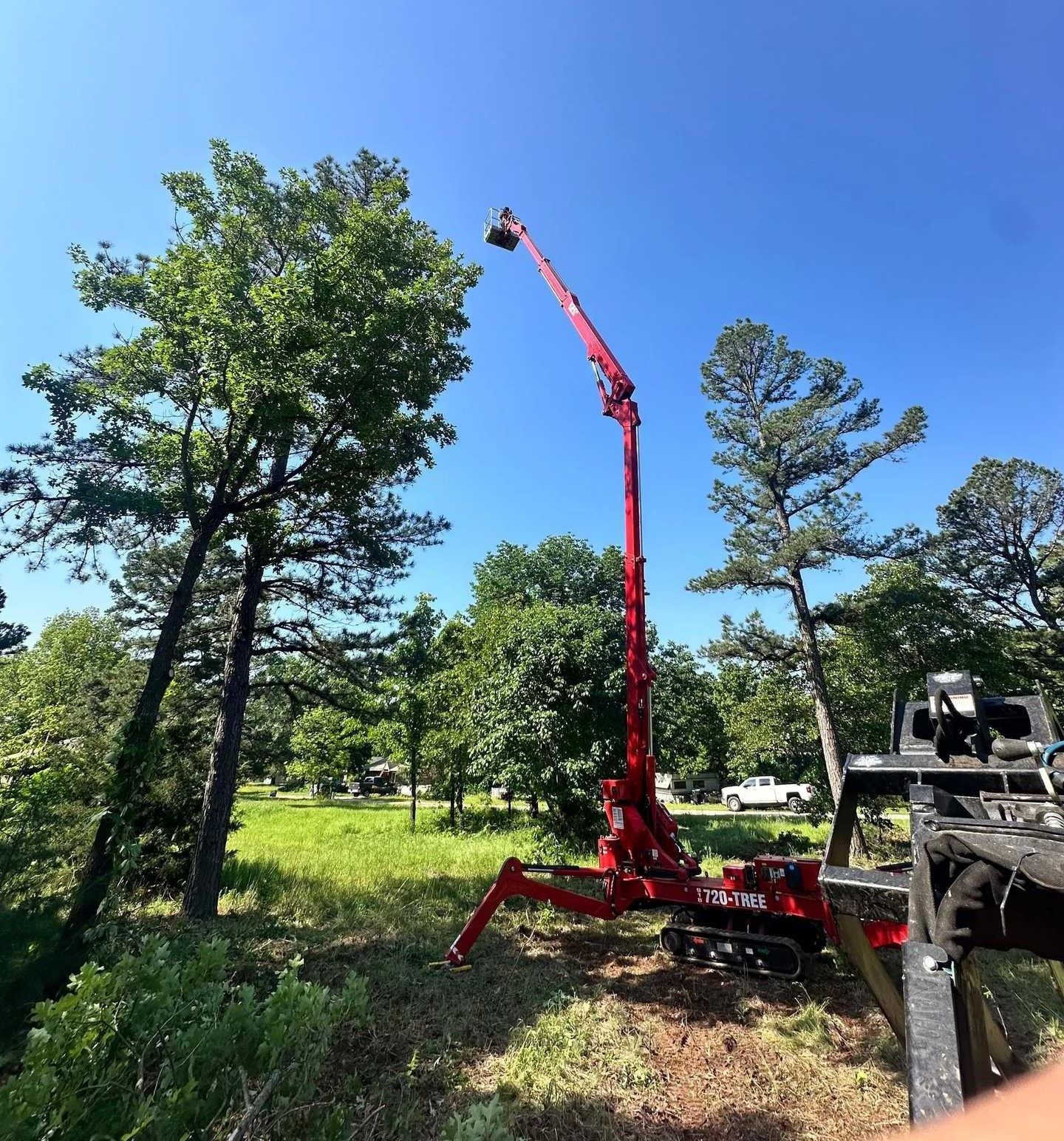
- Canopies blocking cranes, lifts, or equipment (the crew shows up and can’t get in)
- Trees along new driveways, drive aisles, or entrances (so the route gets redrawn mid-project)
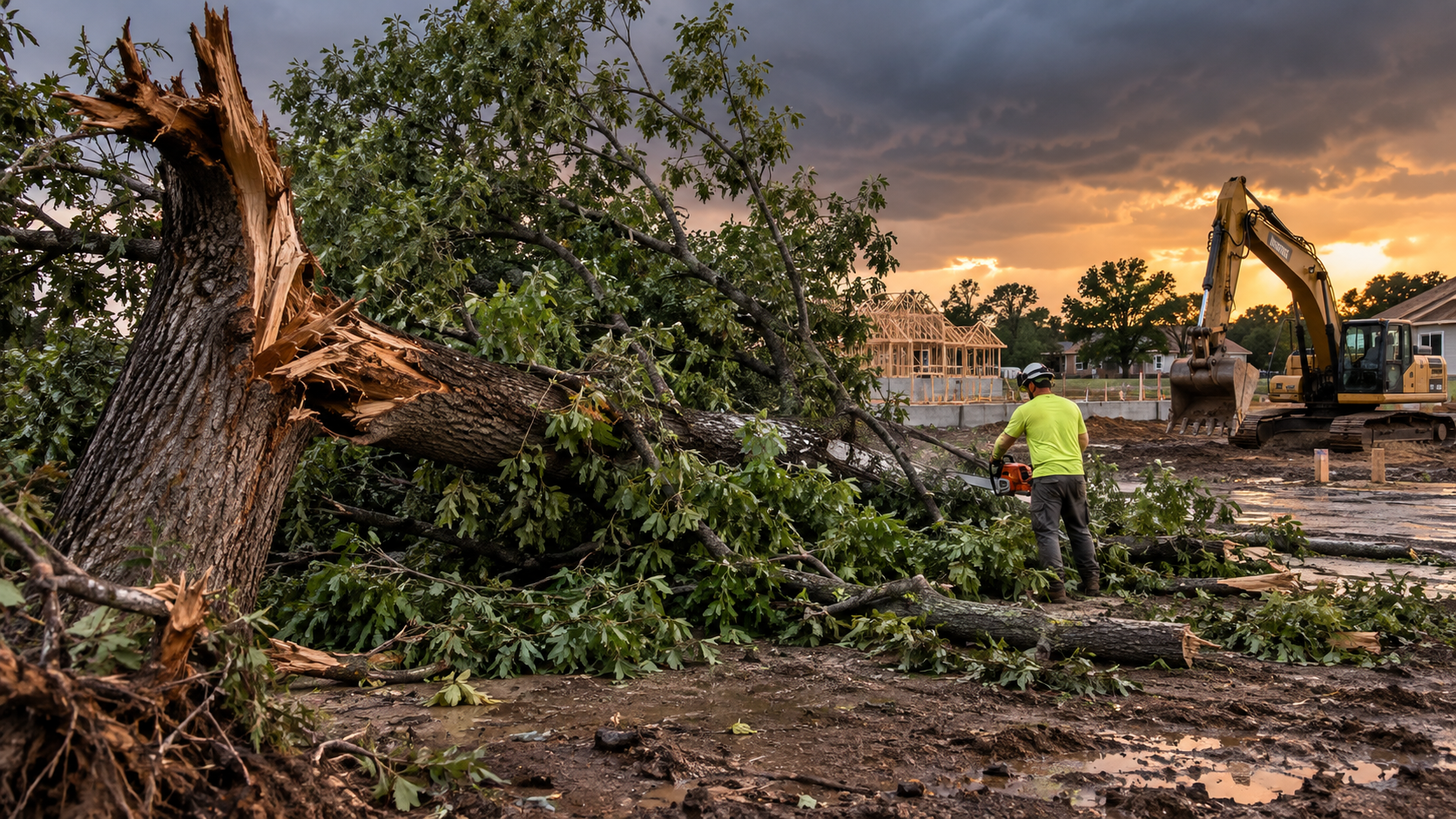
- Dead or declining trees that become hazards once construction traffic arrives (a dying tree and a loaded truck don’t mix)
Every one of these is cheap to fix early. Every one gets expensive once crews and equipment are standing around waiting.
Tree Removal for Building Expansion Starts on Paper
Put the site plan next to what’s actually growing on the property. Then walk it with your contractor.
Mark every tree that touches the footprint, the access routes, the staging areas, and the utility paths. Then make two calls: what goes, and what stays.
The second call is the one that pays off. Mature trees bring shade, curb appeal, and property value. A
tree health assessment sorts the keepers from the liabilities. Some trees are strong and worth protecting. Others are already failing and need to come out no matter what you build.
Parking Lot Expansion and Tree Removal
A parking lot looks like the easy project. Trees make it harder in ways you won’t see from the surface.
Roots lift asphalt and concrete. Canopies drop debris on fresh pavement. And a tree left too close to a new lot edge gets crushed by grading and compaction, dies a year later, and has to be removed anyway.
For a parking expansion, plan to:
- Clear trees inside the paving area and a buffer around it
- Pull stumps and major roots before the base material goes down
- Check any trees you’re keeping for root damage from grading
- Trim overhanging limbs that get in the way of equipment or future traffic
Bury old roots and stump material under new pavement and it will settle and crack. Nobody budgets for that repair, and everybody ends up paying for it.
Commercial Site Clearing Before Construction
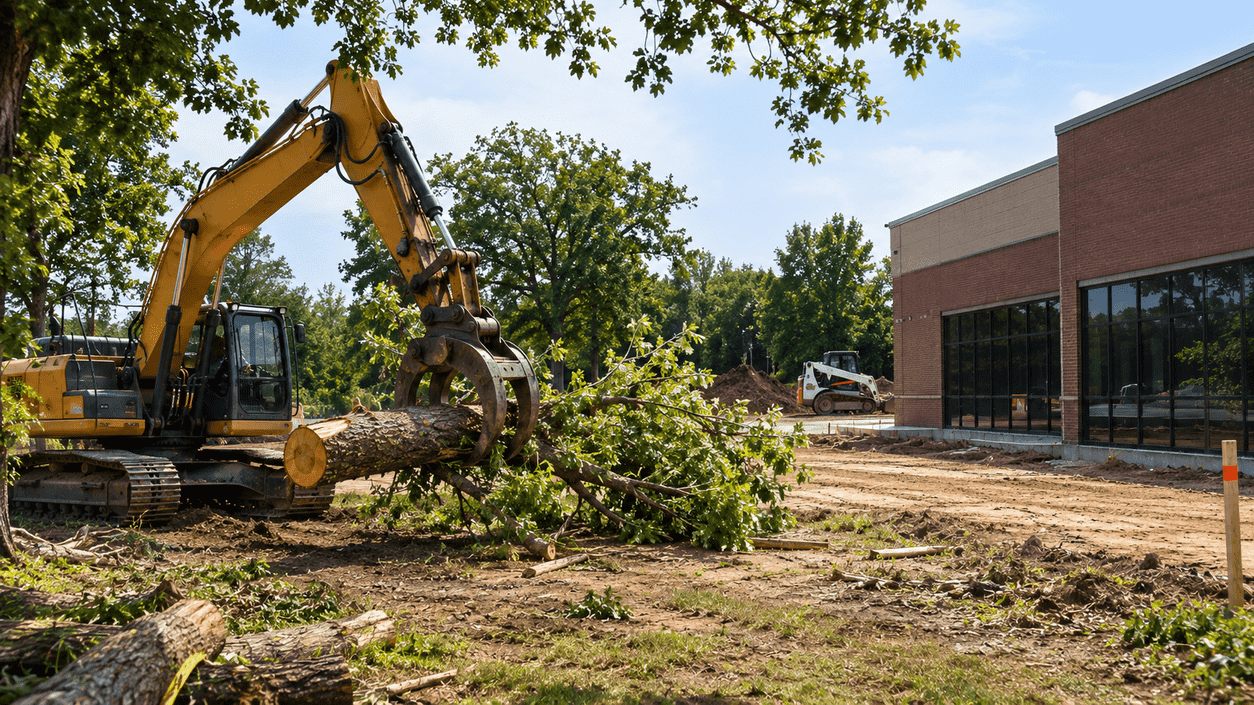
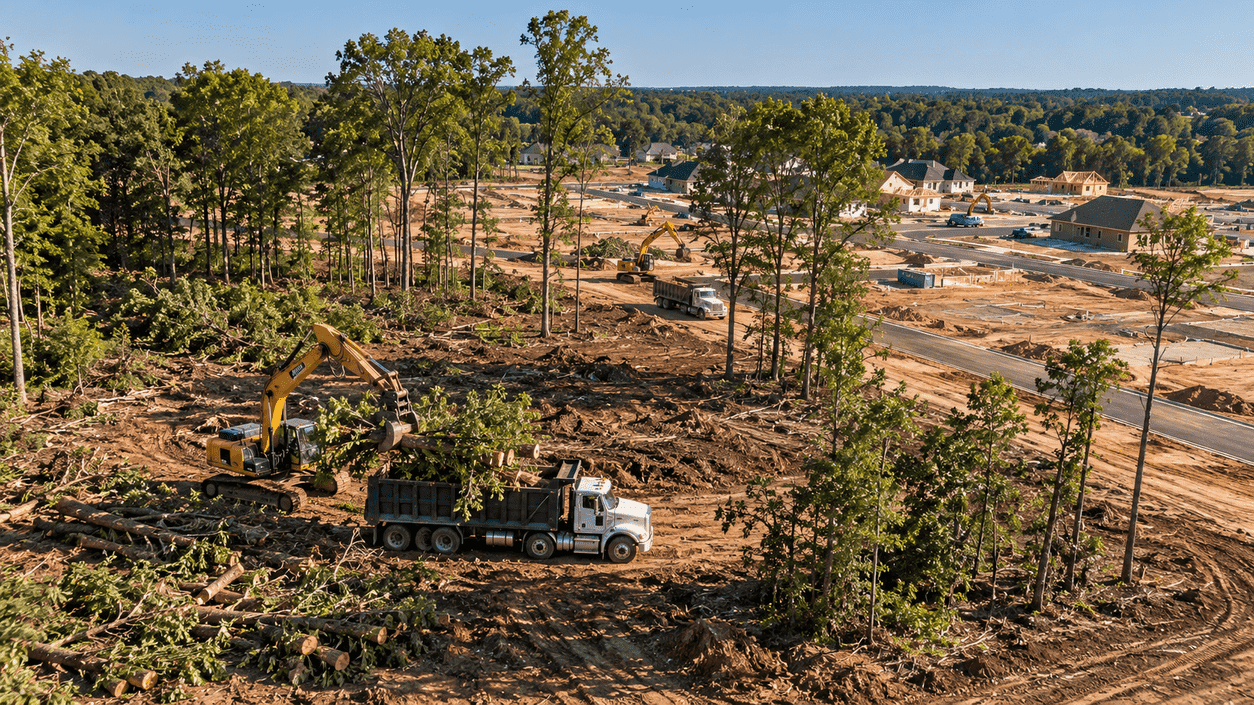
A new building or a major addition takes more than a tree here and there. It takes a full clear.
Professional
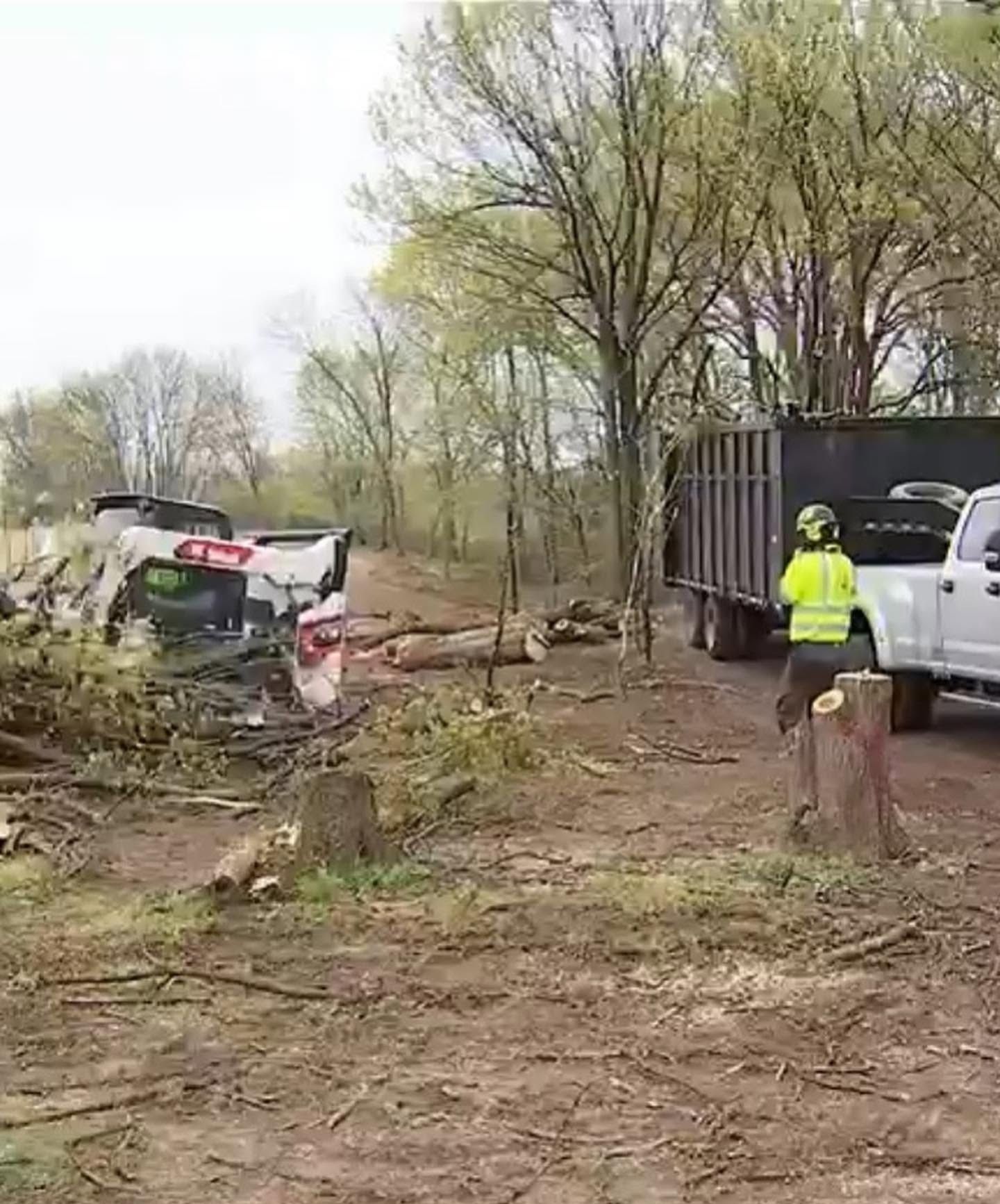
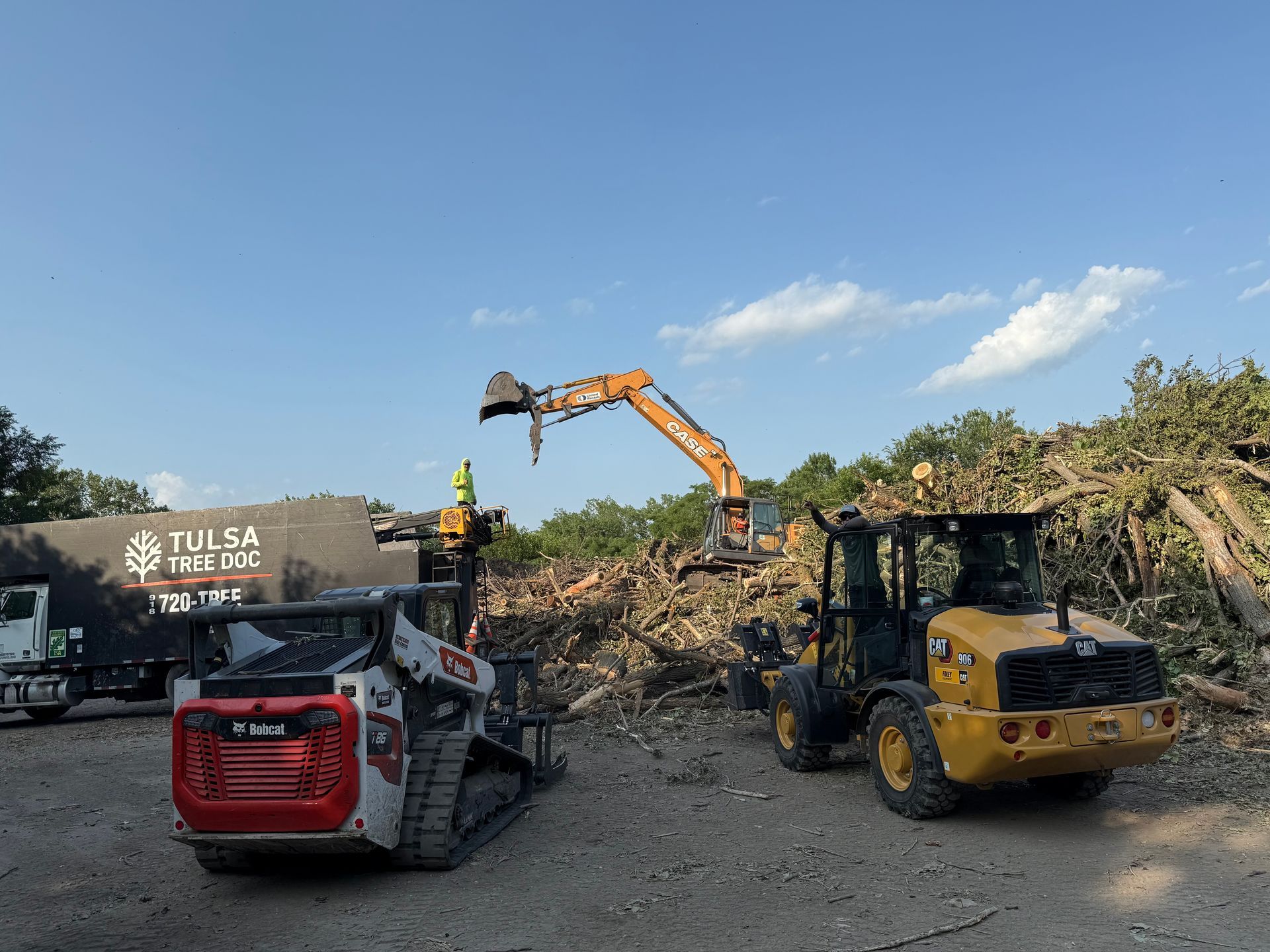
land clearing strips trees, brush, and vegetation from the work area so excavation and grading can start with nothing in the way. A good plan covers the building footprint, equipment routes, staging areas, and utility corridors in one pass instead of piece by piece.
Your general contractor shows up to a site that’s ready. Not one that’s still waiting on somebody to cut a path.
Stumps Are Half the Job
Dropping the tree isn’t the finish line.
Stumps and leftover roots get in the way of grading, foundations, utilities, and paving. A stump in a future planting bed can sit there for years. A stump under a new slab or drive aisle can’t.
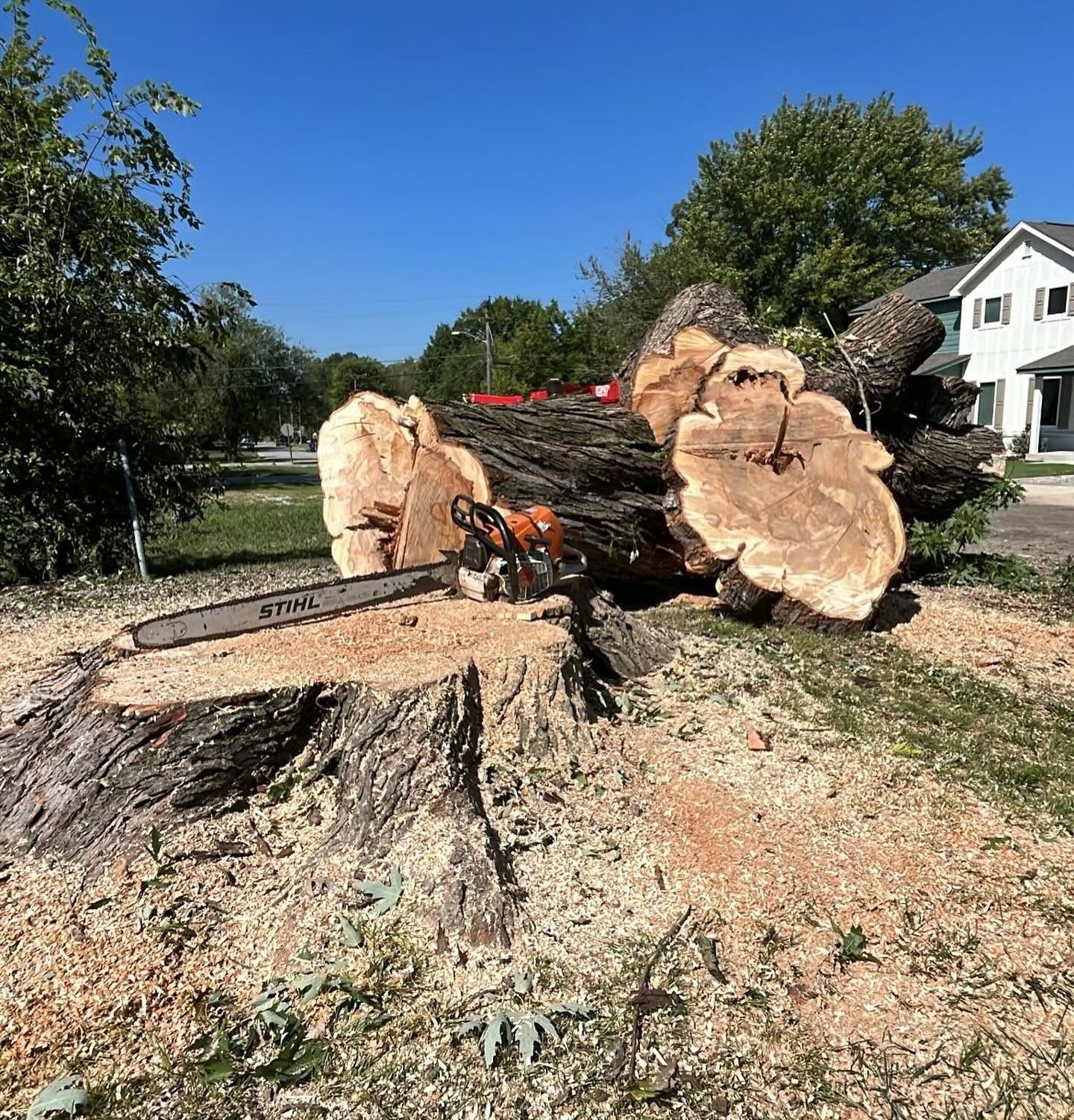
Stump grinding handles most of what’s above ground, and it’s fast. Deeper construction zones may need extra root removal. Decide how each stump gets handled before the scope is locked, so the excavation crew knows exactly what’s under their feet.
Trim What You Can Keep
Not every tree in the way has to go.
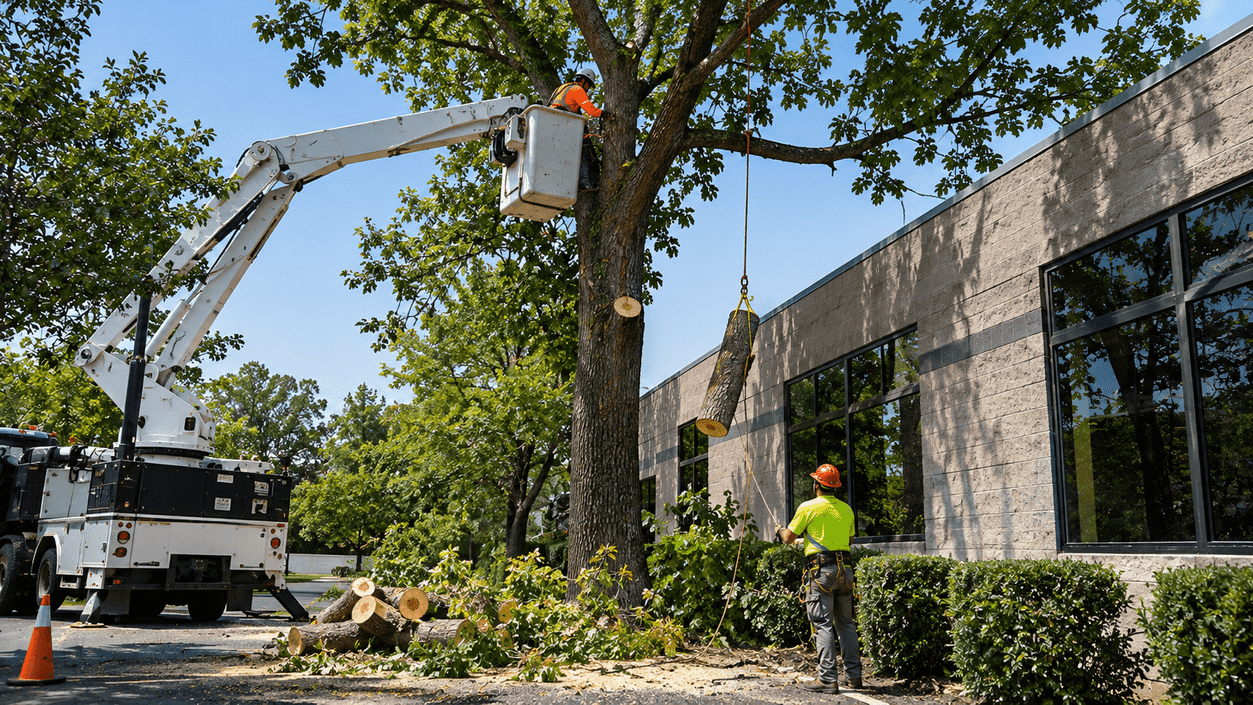
Branches hanging over the work area, rubbing the building, or blocking equipment can often be fixed with professional
tree trimming. The healthy tree stays outside the footprint, and the crew still gets its clearance.
Get the cuts right, though. A badly trimmed tree turns structurally weak, and now you’ve got a safety problem next to the building you just paid to expand.
The Owner Who Plans vs. The Owner Who Doesn’t
Both are expanding. Only one is thinking about trees.
The first owner treats tree work as a surprise. A root system turns up after the foundation crew starts digging. A stump shows up under the new parking area after the base is already down. Change orders pile up, and days disappear.
The second owner brings in a tree service during planning. The assessment happens early. Removal gets sequenced ahead of excavation. The contractor walks onto a site that’s actually ready.
A few days of delay on a commercial project burns real money: labor, equipment rentals, missed opening dates. Planning for the trees costs a fraction of that.
Choosing a Commercial Tree Removal Contractor in Tulsa
Business property tree removal takes a crew that knows commercial work. Insured. Equipped for tight spaces and active properties. Willing to work with your general contractor instead of running on their own schedule.
Ask how much commercial work they’ve done. Ask how they handle debris and cleanup. Ask how they’ll protect nearby buildings, vehicles, and landscaping while they work.
Get Trees Off the Critical Path
Expansion is expensive enough without tree problems surfacing mid-project. Assess the site early. Decide what stays and what goes. Pick the right method for every stump. Do the tree work before everything else.
Tulsa Tree Doc provides commercial tree removal for business owners, property managers, and contractors throughout Tulsa and surrounding communities.
Planning an expansion?
Contact Tulsa Tree Doc or call 918-720-8733 and walk through your site and timeline before the work starts.