A tree in an open field comes down however the crew wants. A tree six feet from an existing building doesn’t get that option.
On additions, renovations, expansions, and redevelopment projects, trees often sit right against the structures you’re trying to protect. One bad cut can mean a damaged roof, a broken window, or a cracked wall. For contractors in Tulsa, commercial tree removal near buildings takes planning, the right equipment, and a crew that has done it before.
Why Trees Near Structures Are a Different Problem
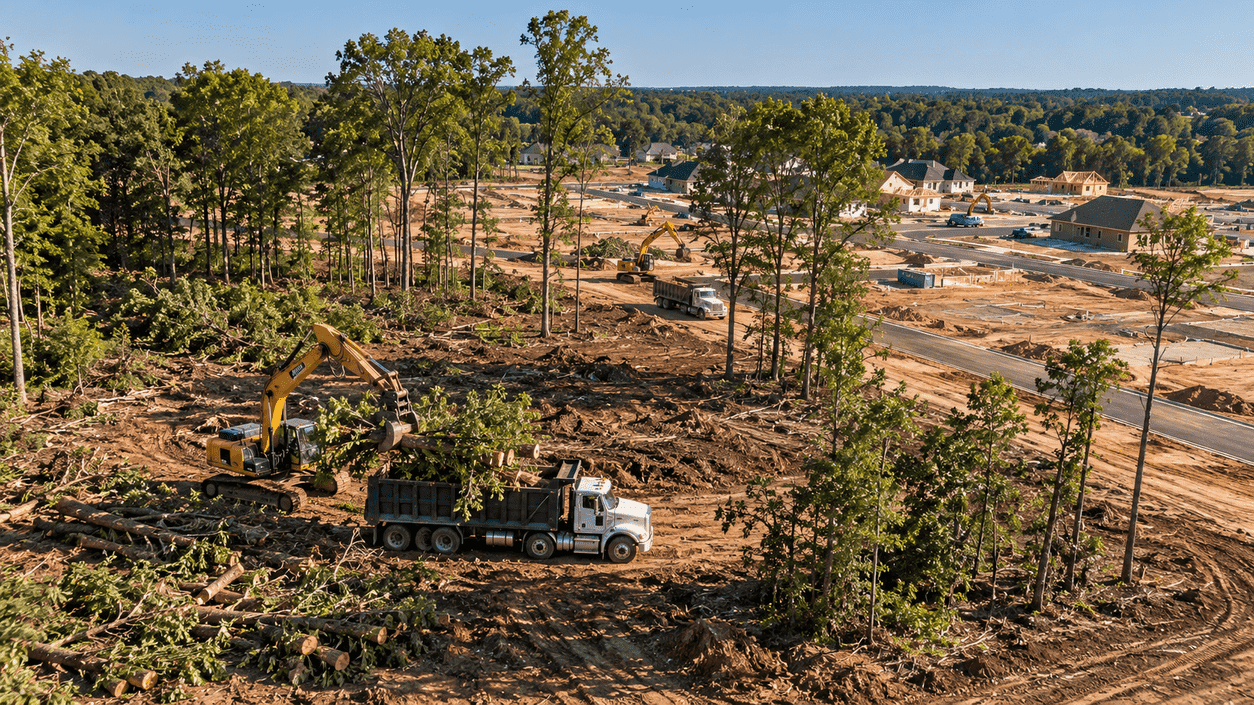
Open-site removal is simple. Drop the tree, cut it up, haul it away. Near a building, every one of those steps changes.
The risks stack up fast:
- Falling limbs and trunk sections can damage roofs, siding, windows, and mechanical equipment
- Overhead utility lines and service drops limit where a tree can go
- Roots may run under foundations, slabs, and walkways
- Neighboring properties, vehicles, and fences shrink the available drop zone
- Decayed or storm-damaged wood can break in ways a crew doesn’t expect
A tree that looks routine from the ground can turn into a liability halfway through the cut. That’s why the plan has to come before the saw.
Controlled Tree Removal: How It Actually Works
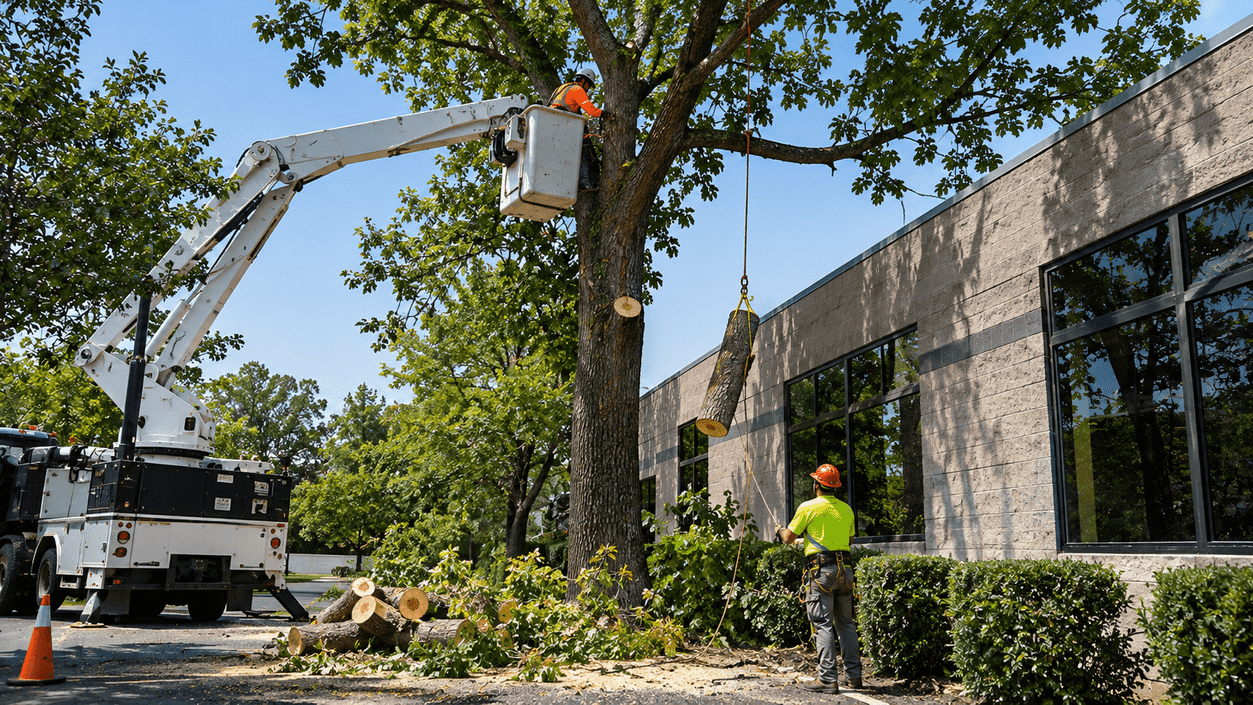
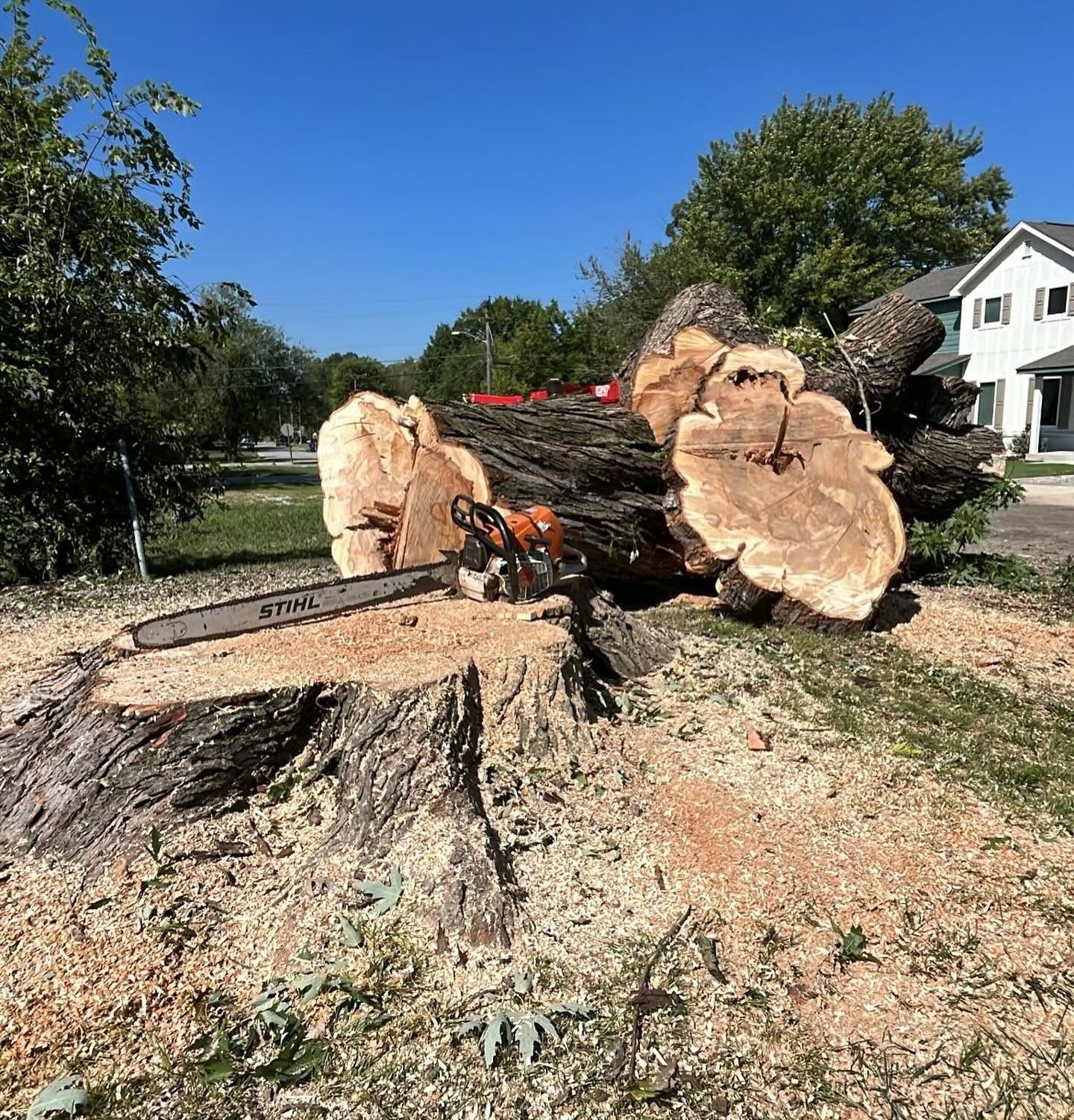
Controlled tree removal means no part of the tree falls freely. The crew takes it down in sections, and every piece is lowered under control.
The usual approach looks like this:
- Assess the tree and the site. Species, condition, lean, and decay all affect how the wood will behave. So do the building, the power lines, and the ground below.
- Set the rigging. Ropes, slings, and rigging points are placed so each section stays under control from the moment it’s cut.
- Dismantle from the top down. Limbs and trunk sections come off in manageable pieces and are lowered to the ground instead of dropped.
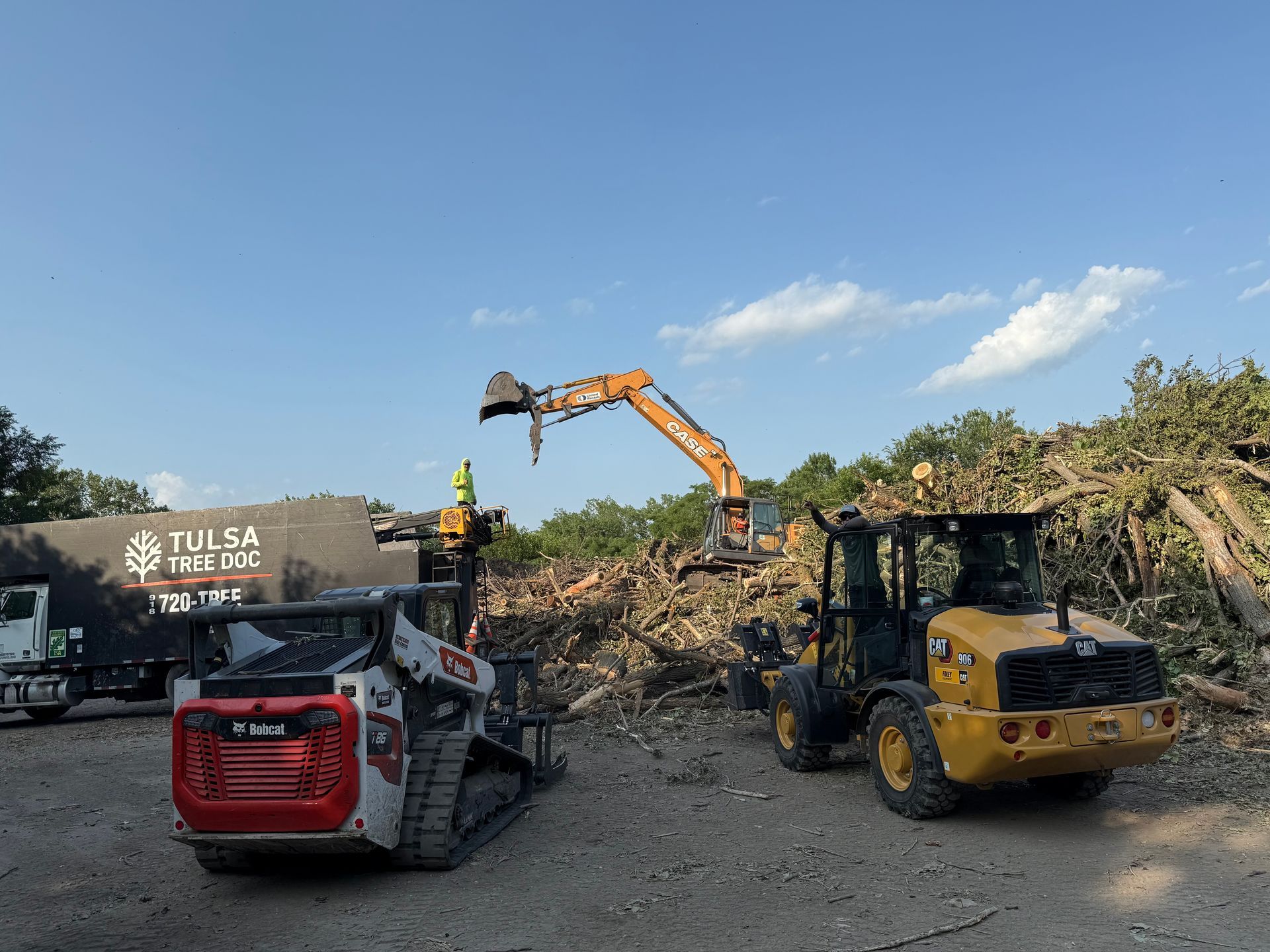
- Use a crane when it makes sense. For large trees over structures, a crane can lift sections clear of the roof and set them down safely.
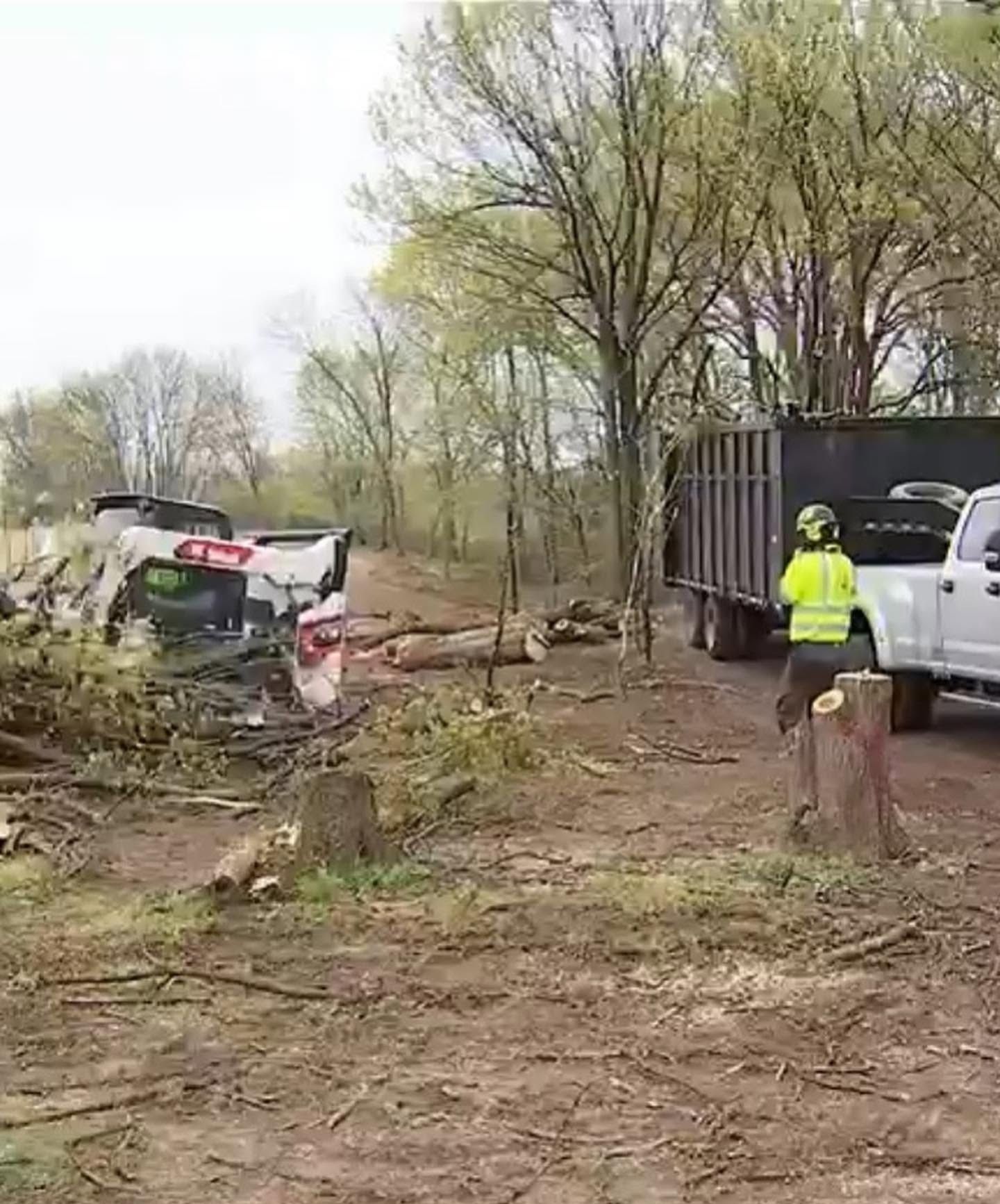
- Clear and protect. Debris is cleaned up as the work goes, and the building, landscaping, and access routes are protected throughout.
Nothing here is about speed. It’s about making sure the tree goes where the crew intends it to go.
Tight Access Tree Removal Takes the Right Equipment
Many commercial properties don’t give you room to work. Narrow drive aisles, fenced lots, rear yards behind buildings, and active job sites all limit what can get in.
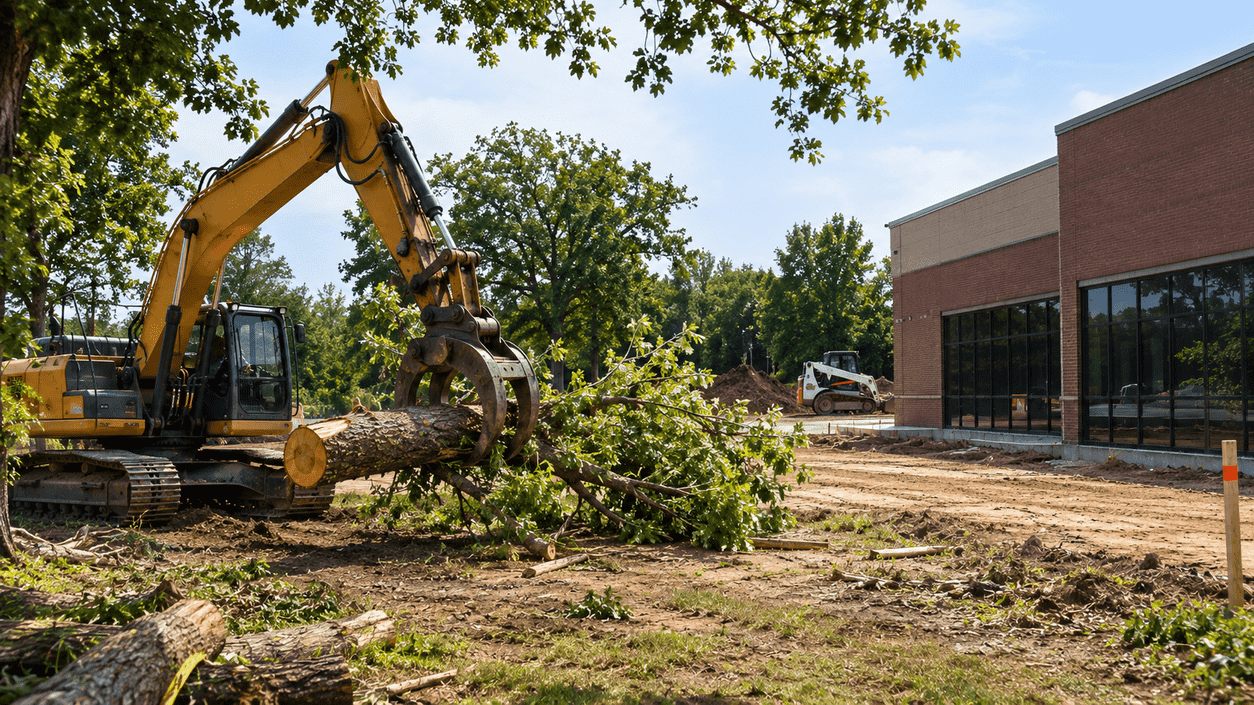
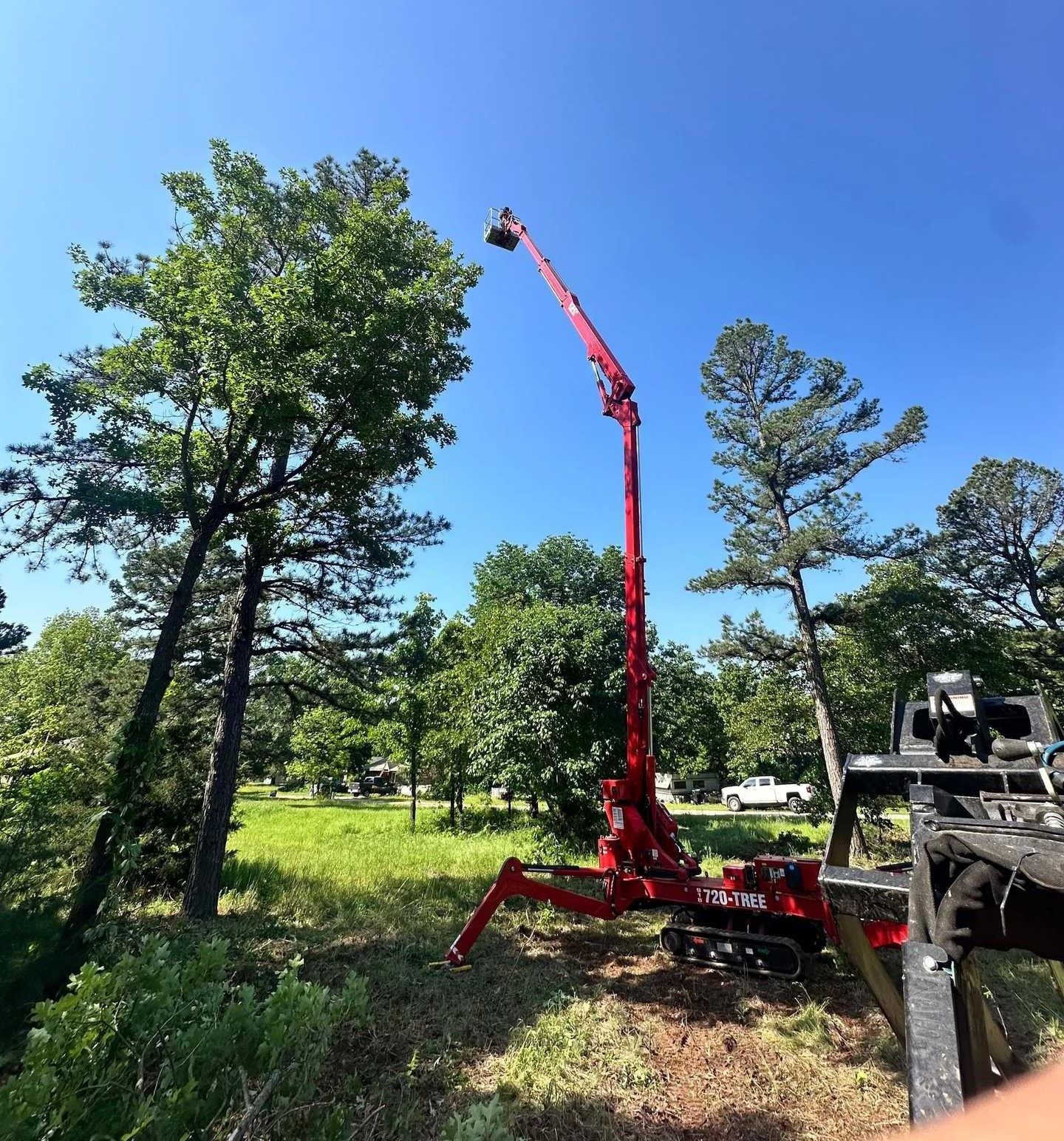
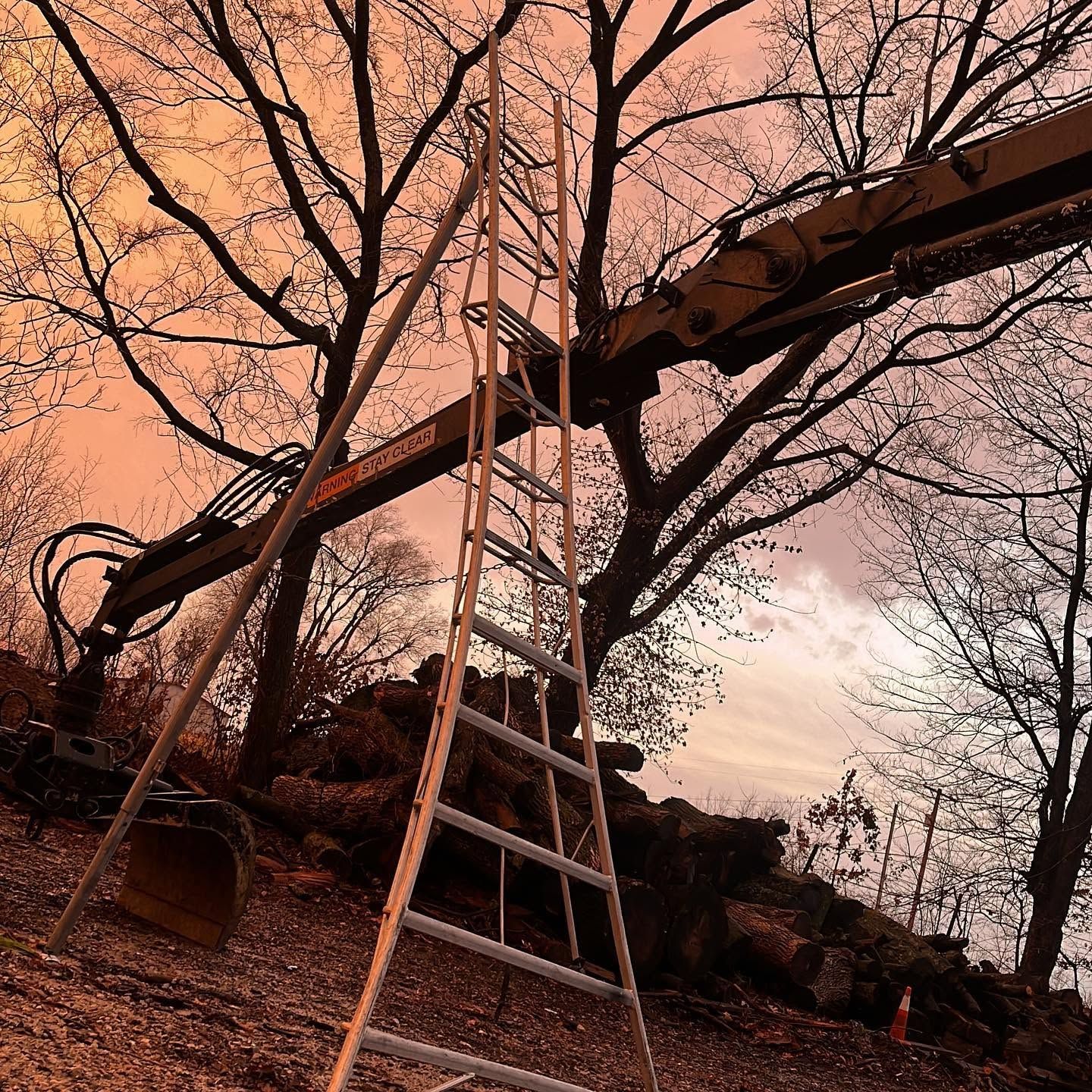
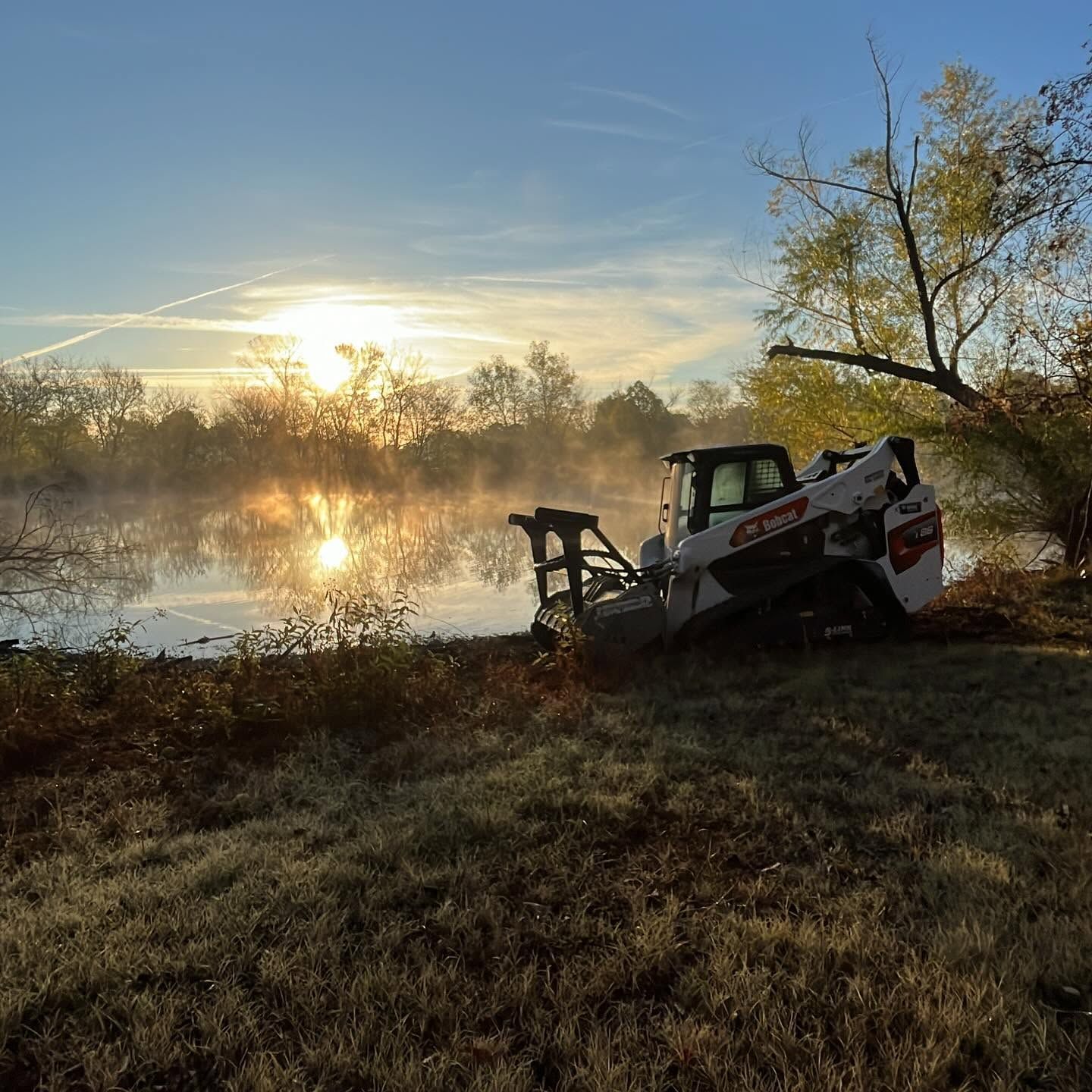
Tight access tree removal depends on matching the method to the site. Climbing crews can reach trees that equipment can’t. Smaller machines fit where larger ones won’t. Cranes handle the heavy lifting when ground access is limited.
The right crew will look at the site first, figure out what can physically reach the tree, and plan from there. Ask for that walkthrough before you agree to a scope.
Check the Tree Before You Plan the Cut
Not every tree near a building is a straightforward removal. Some are already failing.
A professional
tree health assessment tells you whether a tree is structurally sound, how much decay is present, and whether it can be removed safely with standard methods or needs extra precautions. It also helps you decide whether a tree really has to come out, or whether it can stay.
If the answer is that it can stay,
tree trimming may solve the problem. Limbs that hang over a roof, rub against siding, or block equipment can often be cut back without removing the whole tree. That saves cost and keeps healthy trees on the property.
Don’t Forget the Stump and the Roots
Once the tree is down, the stump is still sitting next to your building.
Roots near foundations and slabs need care. Pulling a stump can disturb soil and damage what’s underneath.
Stump grinding removes the stump with far less disturbance and leaves the ground ready for whatever comes next, whether that’s new paving, landscaping, or a foundation.
Decide how each stump gets handled before the scope is final. Your excavation or paving crew will thank you.
When Storms Make It Urgent
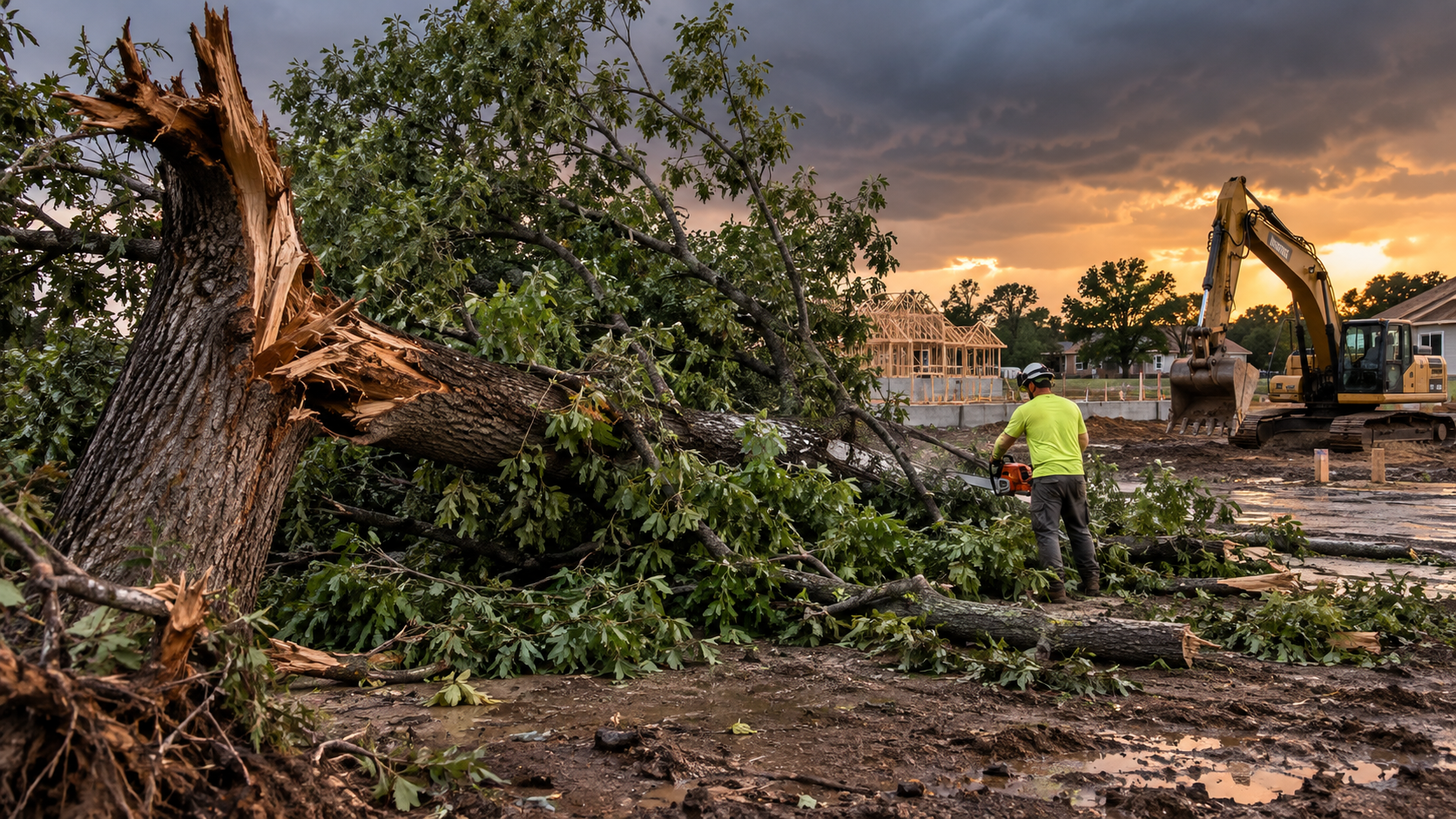
Sometimes the schedule isn’t yours to control. High winds and ice can crack trunks, snap limbs, and leave trees leaning against buildings.
Those trees are under tension, and they don’t behave like healthy ones. They need professional
storm damage cleanup, not a ladder and a chainsaw. If a damaged tree is resting on a structure or near power lines, keep people away and call a crew that handles emergency work.
Two Types of Contractors
Both end up with trees next to buildings. Only one plans for it.
The first treats tree removal as a minor task. Hires whoever is cheapest, skips the site walkthrough, and finds out about the power line or the root system when the work is already underway. Pays for repairs, change orders, and lost days.
The second brings in a commercial crew early. Gets the tree assessed. Agrees on the method, the drop zones, and the protection plan before anyone climbs. The building stays intact and the project stays on schedule.
Damage to an existing structure costs far more than doing the removal properly the first time.
What to Look for in a Commercial Tree Removal Contractor
For commercial property tree removal in Tulsa, look for a crew that can show you:
- Proof of insurance that covers work near structures
- Experience with controlled, sectional removal
- Access to climbing, rigging, and crane options
- A clear plan for protecting buildings, vehicles, and landscaping
- Willingness to coordinate with your general contractor and other trades
If a contractor can’t explain how they’ll keep the tree off your building, keep looking.
Get the Removal Right Before the Project Moves On
Trees near buildings leave no margin for error. Assess the tree, plan the method, match the equipment to the site, and protect what’s standing around it.
Tulsa Tree Doc provides professional
commercial tree removal for contractors, builders, and property owners throughout Tulsa and surrounding communities. We handle tight access, controlled removals, and projects where the building has to come through untouched.
Have a tree that needs to come down near a structure?
Contact Tulsa Tree Doc, call us at 918-720-8733, or email
treedoc92@gmail.com to talk through your site before work begins.