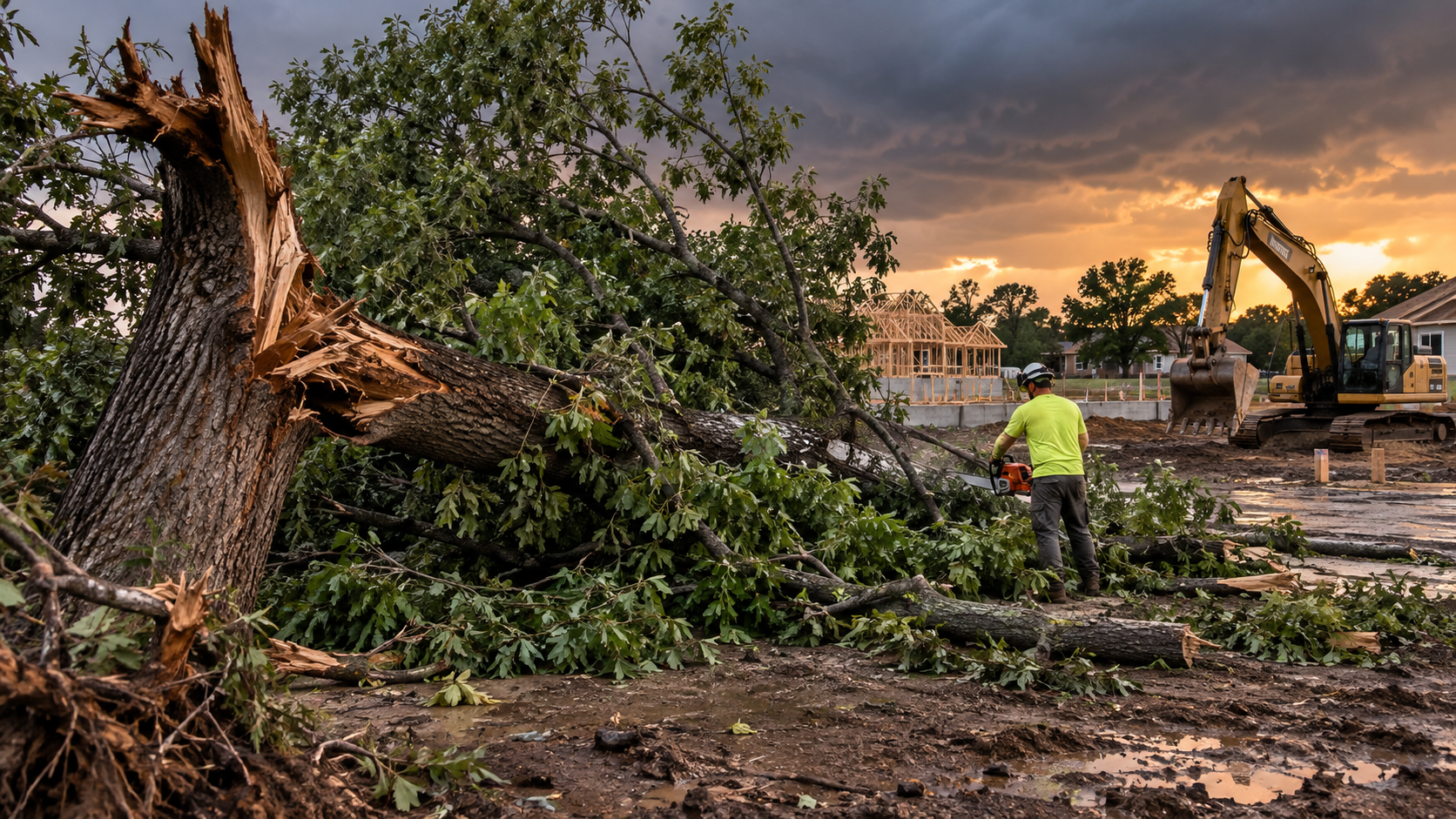
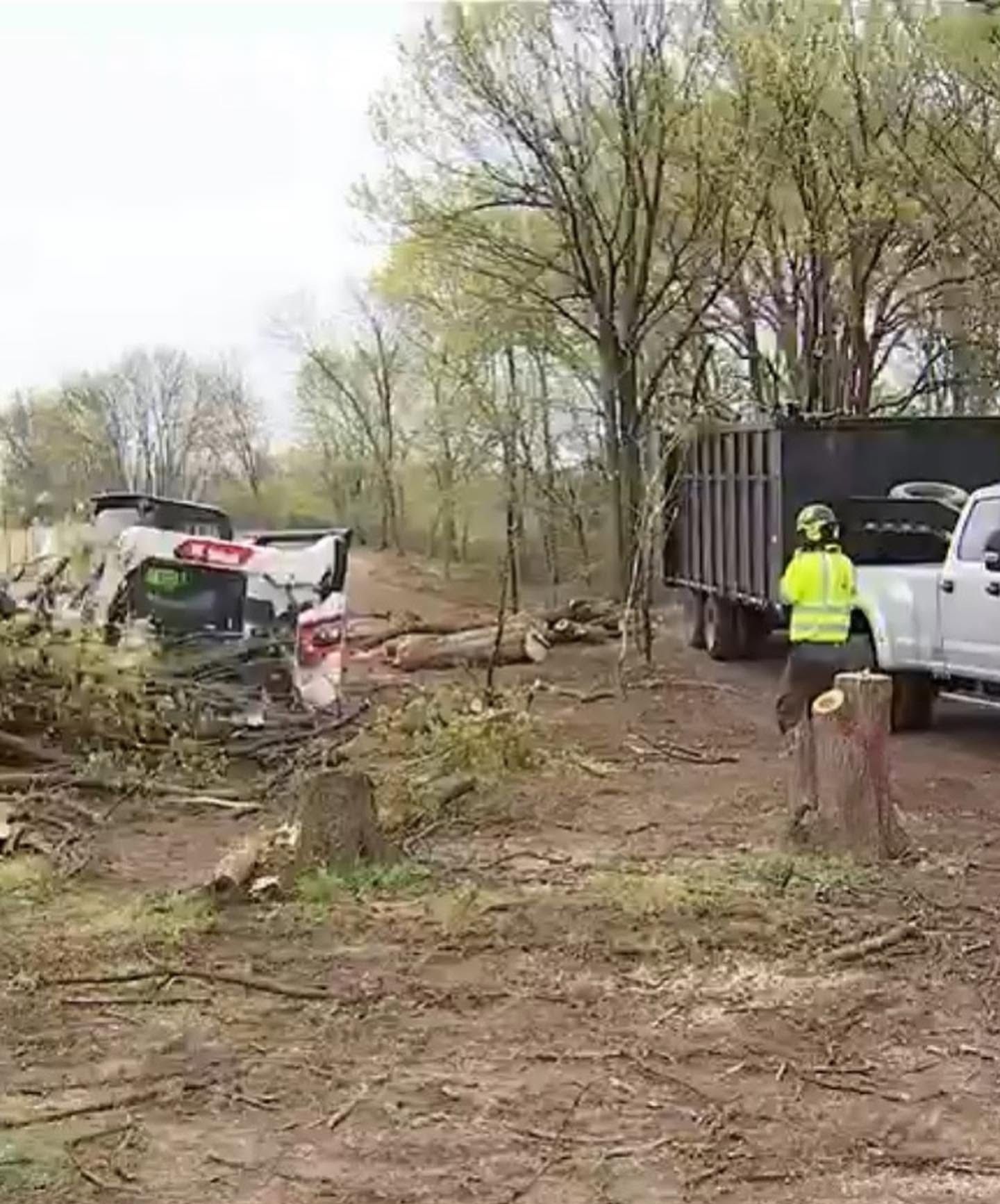
Single-lot tree removal is straightforward. Multi-lot development is a different problem entirely.
When you’re building across multiple lots—a residential subdivision, a commercial development, a phased construction project—tree removal stops being a simple line item and starts being a coordination challenge. The wrong sequence costs schedule time. Poor planning creates access problems mid-project. Trees cleared too early or too late disrupt the trades that follow.
For developers, builders, and general contractors in Tulsa, large-scale tree removal requires the same level of planning as excavation, utilities, and grading. Get it right early, and tree work disappears into the background. Get it wrong, and you’re managing tree problems while trying to run a construction project.
Why Large-Scale Tree Removal Is Different
Removing trees from a single lot is a contained problem. You identify what needs to go, remove it, and move on.
Multi-lot and large commercial projects introduce variables that don’t exist on smaller sites:
- Different phases of construction running simultaneously across the property
- Active work areas that must stay accessible while other sections are still being cleared
- Preserved trees that need protection throughout a months-long construction process
- Stump and root systems spread across a large footprint, each affecting a different trade
- Equipment access routes that change as the project progresses
- Neighboring properties and existing infrastructure that limit how removal can be approached
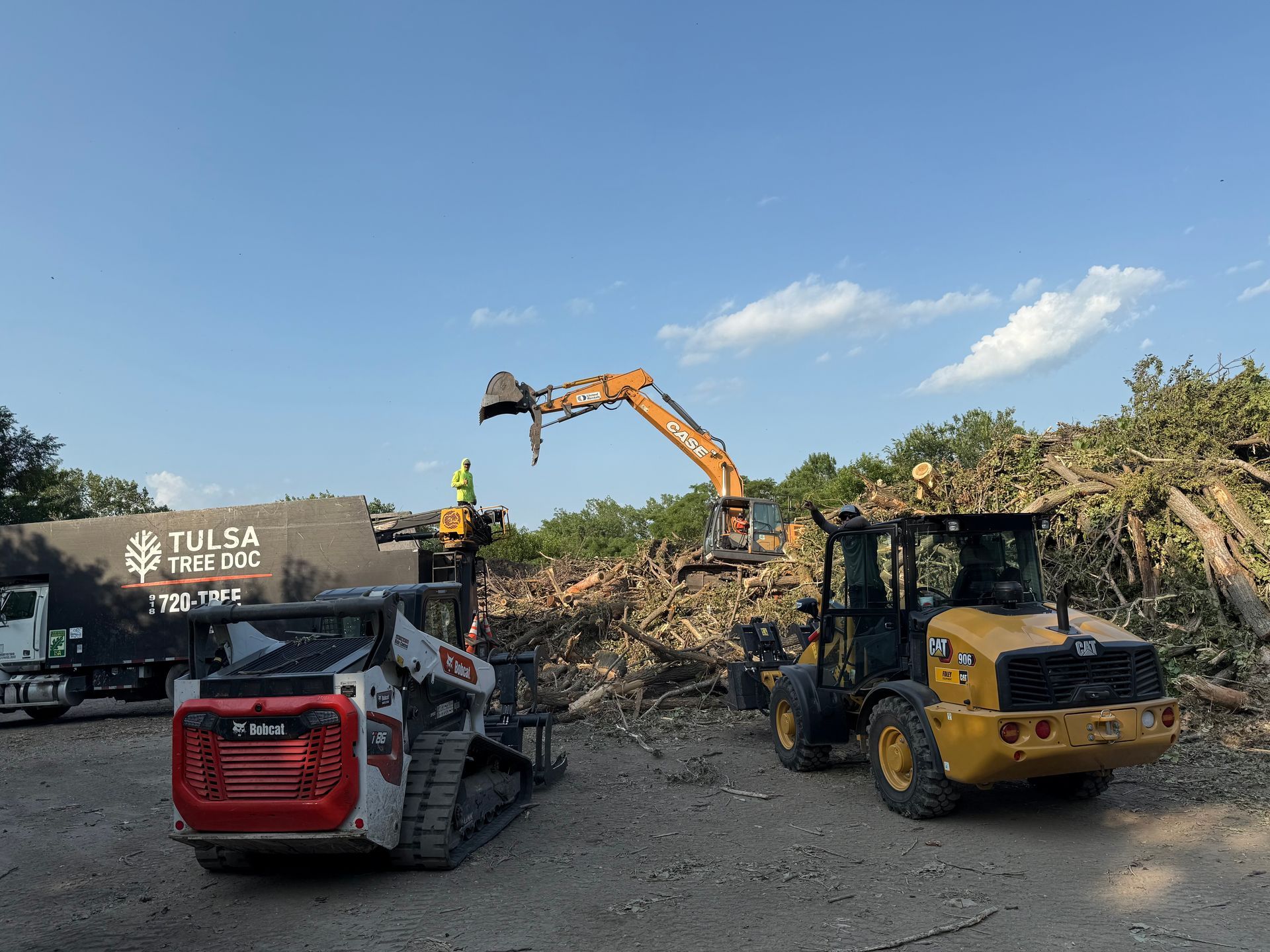
Commercial tree removal in Tulsa at this scale isn’t about volume—it’s about sequencing work so clearing never becomes the reason a project falls behind.
Start With a Site-Wide Tree Assessment
Before any clearing begins on a large development, a comprehensive site-wide evaluation pays dividends.
A professional
tree health assessment across the full property identifies which trees are structurally sound, which are already compromised, and which preservation candidates can realistically survive nearby construction activity.
On a single lot, you might skip this step and clear everything. On a multi-lot development where some trees are being preserved, finding out a “preserved” tree has root damage or internal decay six months into the project is an expensive surprise.
A thorough assessment upfront answers the questions that matter:
- Which trees fall within construction footprints across all phases?
- Which trees along property lines or common areas are worth preserving?
- Which trees are already compromised and need to come down regardless?
- Where do large root systems extend into planned excavation zones?
That information shapes the clearing plan before the first crew mobilizes.
Phase Tree Removal With the Construction Sequence
On large developments, clearing everything at once rarely makes sense.
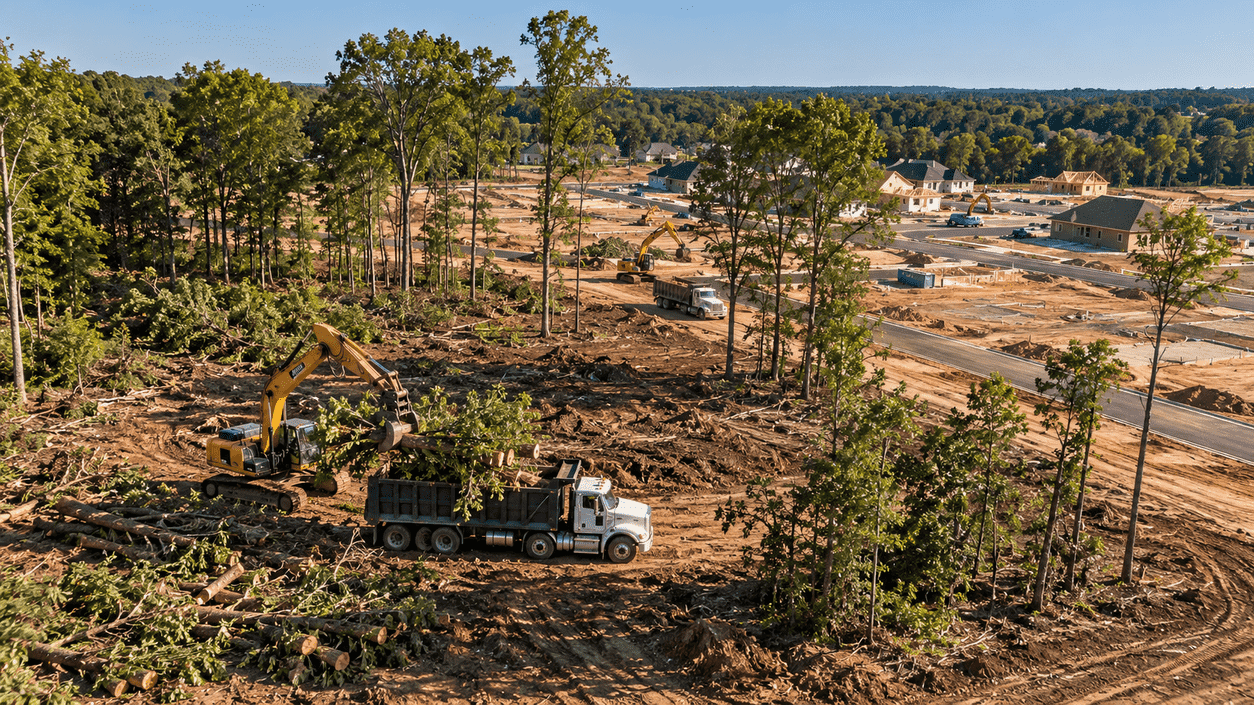
Early phases need to be ready for excavation and foundation work. Later phases may still be in design or permitting. Clearing the entire site immediately creates long stretches of exposed, disturbed ground on sections that won’t see construction activity for months—and it creates access complications as the project progresses.
Phased construction tree removal aligns clearing work with the actual construction schedule:
- Phase 1: Clear active building footprints, primary access routes, and utility corridors for the first construction phase
- Phase 2: Address trees in subsequent building phases as those areas approach mobilization
- Ongoing: Remove any trees identified as hazardous regardless of phase timing
- Final: Address remaining stumps and root systems before site work closes out each phase
This approach keeps the tree removal contractor coordinated with the general contractor’s schedule rather than working independently of it.
Multi-Lot Stump and Root Management
Stump removal on large developments deserves its own planning conversation.
Across multiple lots, stumps and root systems appear in a wide range of locations—some inside building footprints, some under planned driveways, some in utility corridors, others in areas that will eventually become landscaping or common space. Each situation requires a different approach.
Stump grinding efficiently addresses most above-ground obstacles. Areas involving foundations or underground utilities may require full excavation and organic material removal. The wrong approach in the wrong location creates problems for the trades that follow.
Establish stump removal requirements for each section of the development before clearing begins. That way excavation contractors, utility crews, and paving contractors all arrive to a site that’s actually ready for their work.
Protecting Trees Designated for Preservation
On residential developments and commercial projects where mature trees add value to the finished property, preservation requires active management—not just a notation on the site plan.
Construction activity damages trees in ways that aren’t immediately visible. Soil compaction, root zone encroachment, grade changes, and equipment damage all affect long-term tree health. A tree that survives the construction phase can still decline and die within two years if its root system was heavily disturbed.
Trees designated for preservation need physical protection throughout the project—not just during initial clearing. Coordinate with the tree service to establish protection zones and monitor condition as construction progresses.
Working With a Tree Service Across a Long Project Timeline
Large-scale tree removal for developers isn’t a one-time engagement. It’s an ongoing relationship across a project that may span months or years.
A reliable commercial
land clearing partner in Tulsa understands construction schedules, communicates proactively about site conditions, and coordinates with the general contractor rather than working in isolation. When unexpected hazardous trees surface during later phases, or when storm damage affects the site mid-project, that relationship matters.
Knowing who to call—and knowing they understand your project—keeps tree issues from becoming scheduling crisis.
Two Types of Developers
Both manage large construction projects with trees. Only one builds tree removal into the project plan from the start.
The first type addresses trees reactively. Clearing happens when it becomes a problem, stumps get discovered mid-excavation, preserved trees decline post-construction, and the project absorbs delays that could have been avoided with earlier coordination.
The second type treats tree removal as part of pre-construction planning. Site assessments happen before mobilization. Clearing is phased with the construction sequence. Stump requirements are established by location. The tree service is coordinated with the overall schedule, not working around it.
On a single lot, reactive tree management is an inconvenience. Across multiple lots and phases, it compounds into real schedule and budget impact.
Plan Tree Removal Before the Project Starts Moving
Large-scale tree removal in Tulsa works best when it’s planned with the same rigor as the rest of the project.
Assess the full site early. Phase clearing with the construction sequence. Address stumps by location and intended use. Protect preservation trees throughout construction. Work with a tree service that understands commercial timelines and communicates clearly.
Tulsa Tree Doc provides large-scale and
commercial tree removal services for developers, builders, and general contractors throughout Tulsa and surrounding communities. From initial site assessment through final stump removal, we coordinate tree work around the needs of the project.
Planning a multi-lot development or large commercial project?
Contact Tulsa Tree Doc to discuss your site, phasing requirements, and clearing scope before construction begins.