Speed is the only thing that matters after a storm. But speed without order is just chaos with a chainsaw.
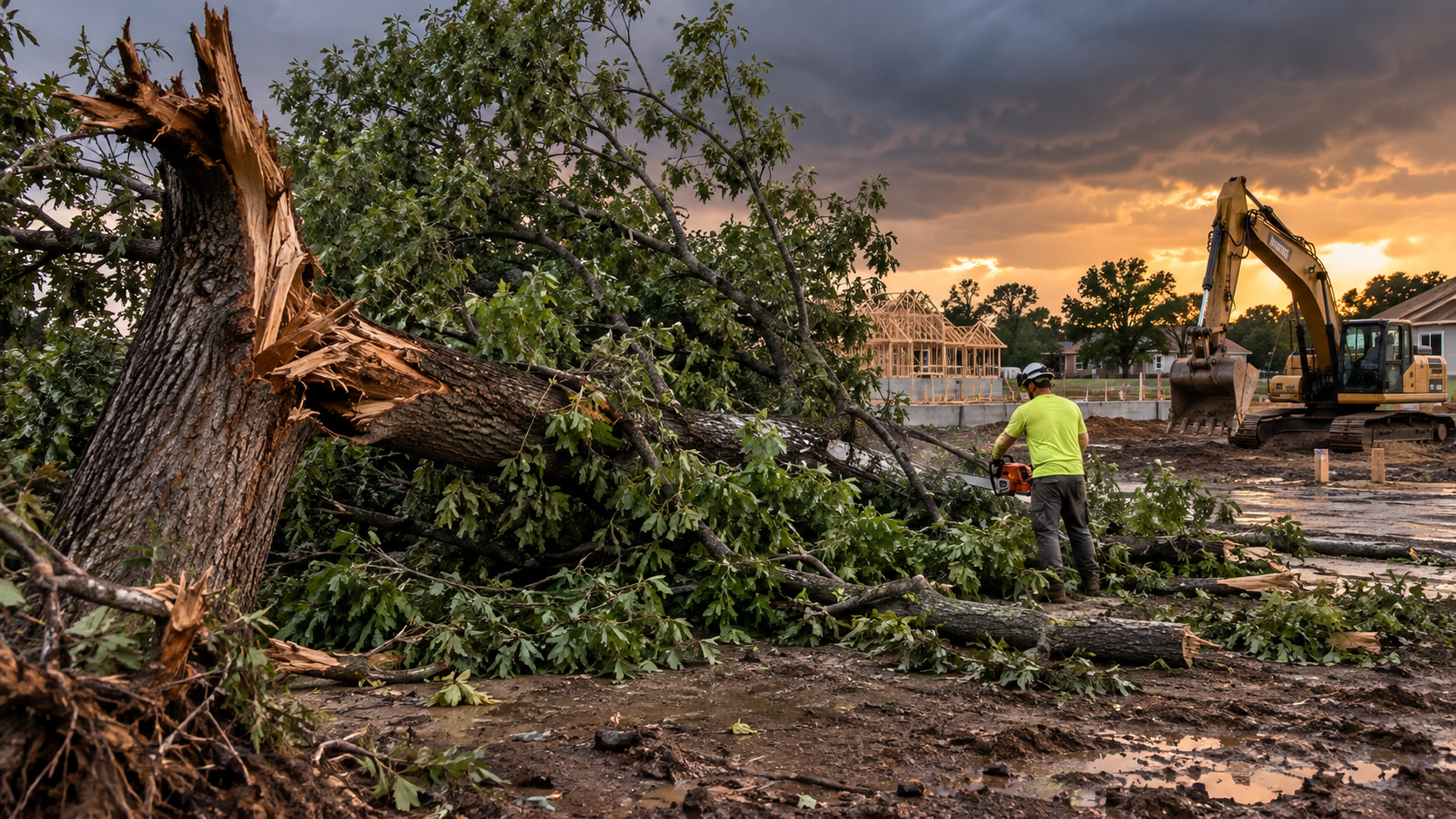
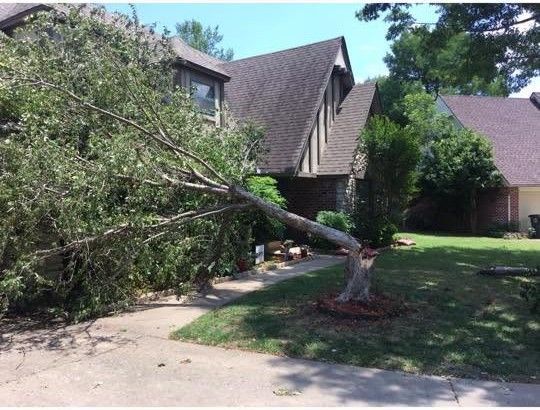
Picture a Friday afternoon. Your site is clean, the equipment is parked, and the framing crew is on schedule. Then a front rolls through Saturday night. By Monday morning, an oak is lying across your gate and a split trunk is dangling over the slab.
For contractors in Tulsa, a fallen tree is never just a cleanup job. It locks out equipment, idles subcontractors, and bleeds schedule. Every hour it sits, the bill grows.
This guide walks through how to inspect the site, decide what's urgent, and sequence the work so a storm costs you hours instead of days.
Inspect the Site Before Crews Return
Before a single worker steps back on the property, someone needs to walk it.
Some damage announces itself, like a big trunk across the entrance or a limb resting on a framed wall. The rest hides. A tree with an internal crack or a loosened root ball looks perfectly fine right up until it isn't.
What to Look For After Severe Weather
- Fallen trees blocking entrances or internal roads
- Trees leaning toward structures or active work areas
- Visible trunk cracks or splits
- Partially uprooted trees with exposed roots
- Broken limbs suspended in the canopy
- Trees resting against equipment or temporary structures
- Any trees near damaged utility lines
Don't send anyone under an unstable tree to open up a corner of the site faster. That's not hustle. That's a liability waiting to happen. And if a tree is touching or near power lines, the utility company gets called before anyone touches a saw.
Why Standing Trees Can Still Be Dangerous
Wind can crack a trunk or shift a root system without ever putting the tree on the ground. Add soaked soil and the roots lose their grip even faster. The tree looks fine. It just can't be trusted anymore.
Those are the ones that hurt people, because nobody sees them coming.
A post-storm
tree health assessment sorts the damaged from the sound. The trees you carefully saved during site prep can turn into hazards overnight, so last month's "keeper" label doesn't count anymore.
Prioritize by Location, Not Just Damage
Plenty of damaged trees can wait. Where they're standing is what matters.
A cracked tree in a far corner of a big lot is a problem for next week. A cracked tree over your building pad, your site trailer, or the only road in is a problem right now. Same damage, completely different risk.
Handle the dangerous ones first. Get the site working again. Then deal with the rest.
The Order to Work In
The tree itself usually isn't the expensive part. The standstill is. One trunk across the entrance can keep out concrete trucks, excavators, and every sub on your schedule. So work in this order:
- Trees creating an immediate hazard to workers or structures
- Trees blocking the primary construction entrance
- Trees preventing access to active building areas
- Trees blocking equipment or material staging
- Damaged trees affecting future phases
You don't win by clearing the most trees. You win by clearing the right ones first.
Why Storm Tree Removal Is Its Own Kind of Job
Dropping a storm-damaged tree on a live jobsite is nothing like felling one in a pasture.
Walls, fences, machinery, and power lines all squeeze the workspace. And damaged wood doesn't cooperate. A trunk loaded with stress can twist or kick in directions a healthy one never would.
Before the first cut, the crew has to read the tree: its condition, which way it leans, what's around it, and how to take it apart without causing a second problem. With
commercial tree removal in Tulsa, the site shifts daily. The empty drop zone you saw this morning might hold a delivery truck by lunch.
Coordinate Tree Work With Your Construction Schedule
Your subs don't care that it stormed. The pour is still booked. The utility crew is still coming.
If the tree crew doesn't know your priorities, they'll start with whatever's closest, and you'll find out at 7 a.m. that the trade you needed is blocked. Hand them a sequence instead. Name the areas that reopen first, and they'll follow it.
Don't Forget the Stump
Once the tree is down, you're only halfway done.
A stump in a future planting bed can sit for months. A stump in a driveway corridor, utility route, or building footprint cannot. Deal with it before the next phase, not when an excavator bucket finds it.
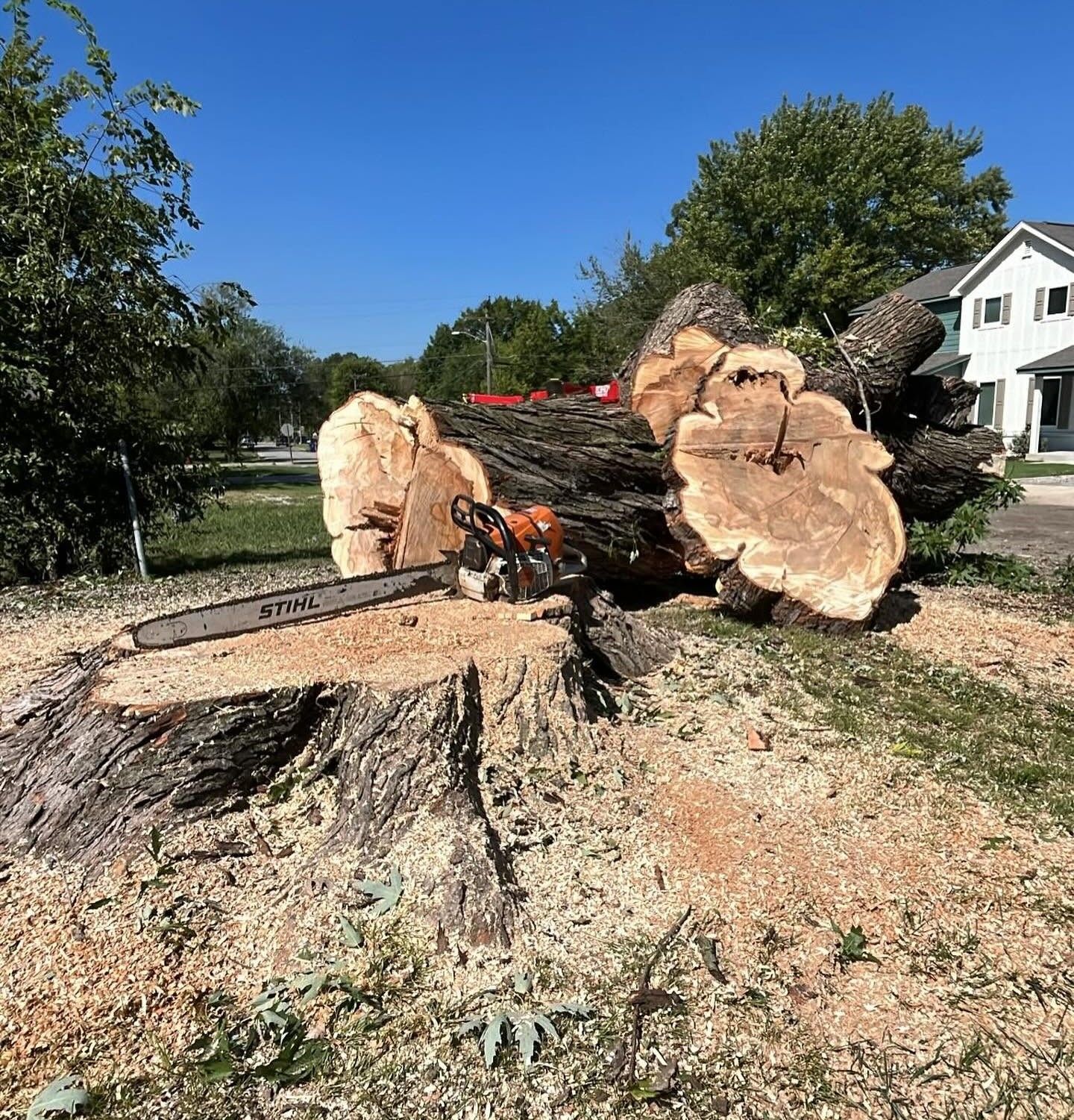
Stump grinding takes care of most surface obstacles quickly. Some spots call for full excavation, depending on what's going in. Settle that question now, while it's cheap.
Same Storm, Two Very Different Outcomes
Every contractor in Oklahoma gets hit eventually. What happens next splits them into two groups.
The first group scrambles. They call the first company that picks up, let the crew start wherever, and reopen the wrong areas. They lose two days, then blame the weather.
The second group has a plan. They inspect early, rank the risks, share priorities, and open the critical access first. The same storm costs them hours.
You can't control the sky. You can control the sequence.
Get Your Site Back to Work
Find the hazards, clear what's blocking the build, restore access in order, and line up the
storm damage cleanup with what your schedule actually demands.
Tulsa Tree Doc provides emergency and commercial tree removal services for contractors, builders, developers, and commercial property owners throughout the Tulsa area.
Storm damage on your site?
Contact Tulsa Tree Doc and tell us what you're dealing with.